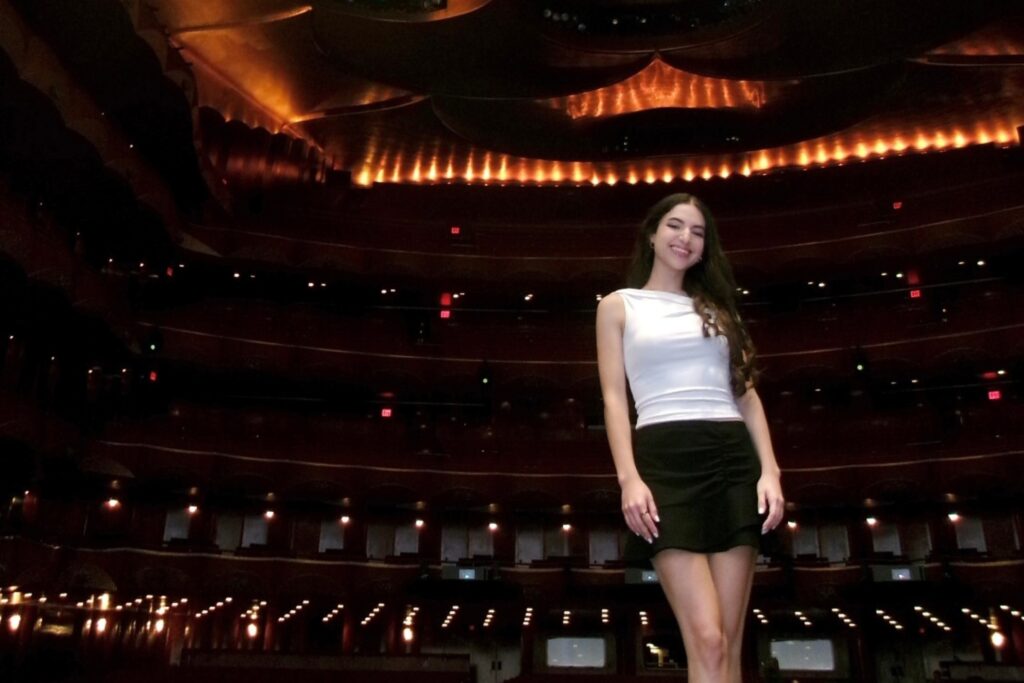
She moved to New York at 18 to train at the world’s most demanding institutions. Today, at 24, Morena Galán is the youngest Hispanic and Argentine member of the Metropolitan Opera House’s permanent chorus. Her path has taken her to perform as a soloist on stages as renowned as Carnegie Hall, Lincoln Center, New York City Center, and our own Teatro Colón; in addition, her talent as a composer was recognized by the United Nations, where she presented her orchestral work at the women’s rights summit.
In this exclusive interview, Morena traces her journey from her first singing classes at the School, from which she graduated in 2018, to the lights of the Big Apple, and reflects on how the well-rounded education at Belgrano Day School was the key to her international rise.

Bilingualism as identity
You moved to New York at 18, alone, to study at extremely demanding institutions. Beyond the academics, how do you feel that having grown up in a bilingual environment and having gone through challenges like the Dual Diploma gave you the confidence you needed so that language and culture became a tool in your favor rather than a barrier?
Growing up in a bilingual environment gave me something far more valuable than simply speaking two languages: it gave me ease in moving between cultures. Being constantly immersed in English made me feel comfortable both speaking Spanish and navigating a professional, independent life in another country. Taking most of my subjects in English greatly expanded my vocabulary, especially at a more technical and academic level.
When I moved to New York at 18, I didn’t feel like I was “translating” who I was—I felt that English was as much my own as Spanish. That also meant that when I got to university, I could handle a demanding environment without needing a long adjustment process.
The Dual Diploma was also fundamental. The intensive pronunciation practice, along with the program’s demands, further shaped my discipline and my ability to organize and manage my time—something essential in both academic and artistic life, since I was juggling school, the Dual Diploma, and the Teatro Colón (where I was part of the Children’s Choir for 6 years) all at once.
Taking most of my subjects in English at school, and also sitting exams like the A Levels and IGCSE, greatly expanded my vocabulary, especially at a more technical and academic level.
From a very young age I was also part of school plays in English, recitals, and many artistic forms where English was used and internalized, and that deeply shaped my relationship with the language. It wasn’t just another subject: it was acting, singing, and expressing myself in another language. That experience taught me very early that language isn’t a barrier when you inhabit it naturally. It gave me stage confidence, expressive freedom, and above all, the sense that I could be authentic in any context.
Bilingualism wasn’t just an academic tool: it was a foundation that gave me security, identity, and the ability to move through the world with ease.


Where it all began: the Belgrano Day School stage
BDS has a very strong tradition in Music & Arts. Do you remember a specific experience on the school stage that was meaningful to you, or that fueled your desire to pursue music professionally?
I have so many artistic memories from Belgrano Day School that it’s hard to pick just one, because honestly, that’s where it all began. My journey started at the school’s Music Academy: I began taking singing and piano lessons at age 7, and from that moment on, the stage became a natural part of my life. If I had to choose three moments, they would be these.
The first was my first inter-school singing competition. I was very young—a tiny Morena—and I sang “Capullito de alelí.” I remember the nerves, the excitement, and the feeling of doing something that deeply represented me. Beyond the result, it was the first time I understood that singing could be more than just an activity: it could be a calling.
The second moment was when I sang in front of the entire primary school during Music Day. Many people didn’t even know I sang. I was in fourth grade, with a guitar almost as big as me, performing “What’s Up” by 4 Non Blondes. When I finished, all the kids stood up and started shouting “Again, again!” That reaction hit me hard. It was the first time I felt that direct, immediate connection with an audience—that live energy that can’t be explained, only felt.
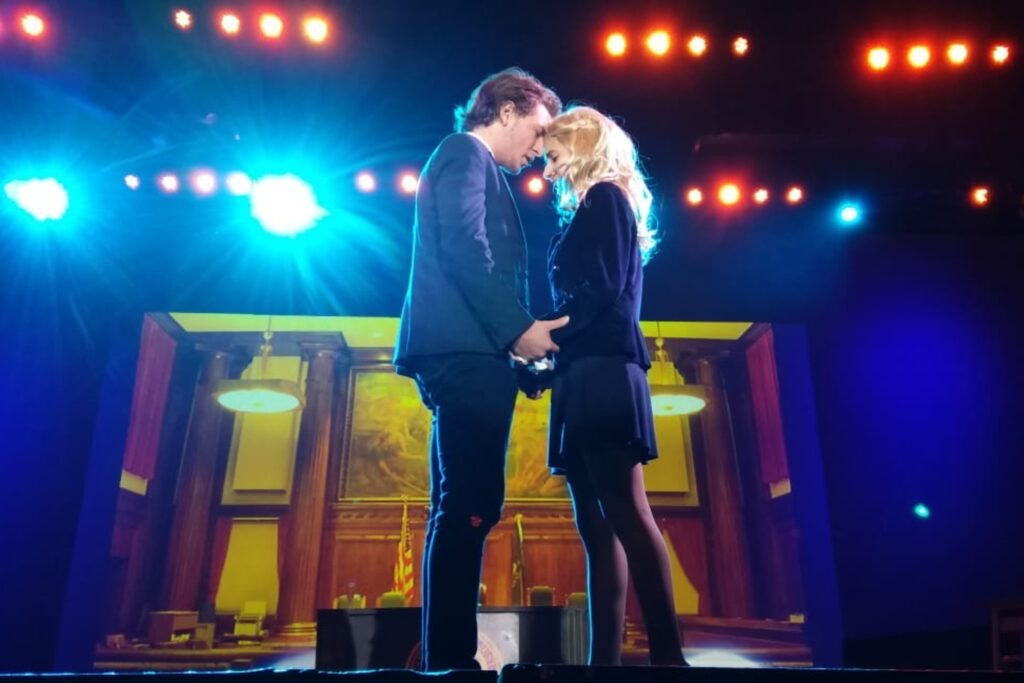
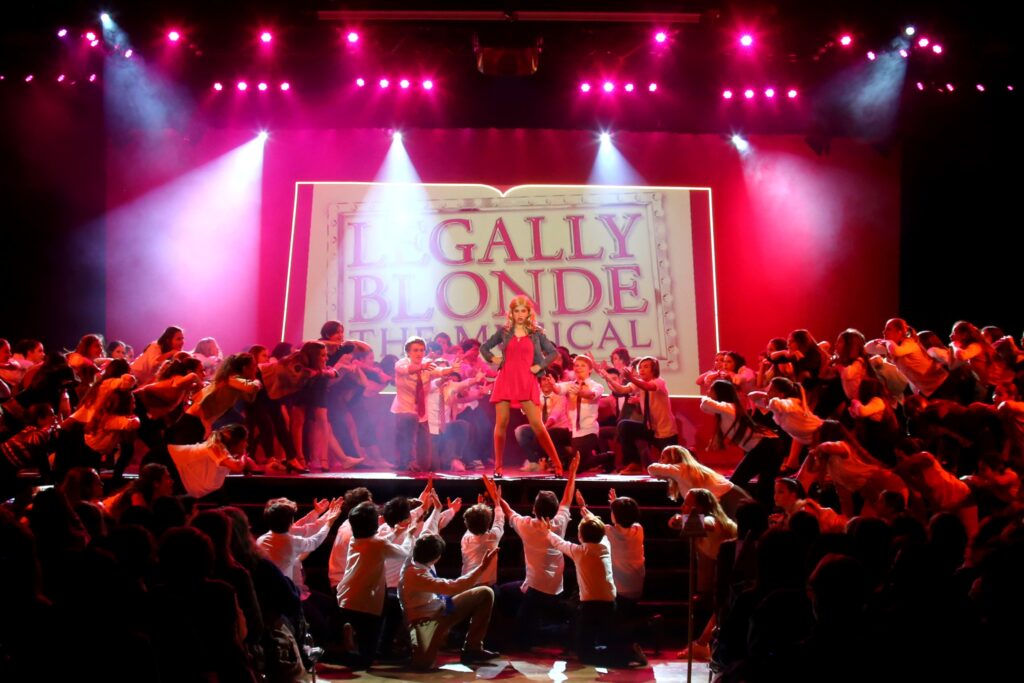
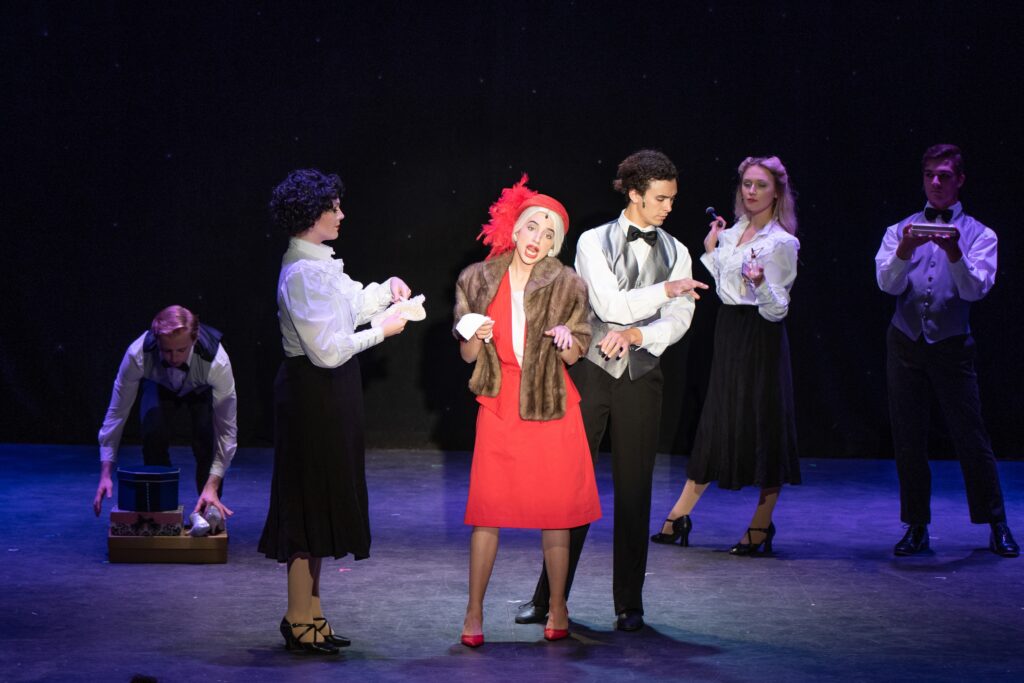
And the third was in my final year of high school, playing Elle Woods in Legally Blonde. That role marked a turning point. Not just because of the vocal and acting demands, but because it meant sustaining a complex character—with humor, vulnerability, and strength—throughout the entire show. That’s when I confirmed I wanted to pursue this professionally. It was no longer just enjoyment: it was commitment, discipline, and love for artistic work.
Looking back, I see that the school gave me technical tools, as well as stages where I could discover who I was standing on them. And that feeling—of being exactly where I’m meant to be—is the same one that stays with me today when I step onto the stage at the Metropolitan Opera.

Advice for the new generation
You’re an inspiring example for the students currently in BDS classrooms dreaming of artistic or international careers. What would you tell them?
Even though I always knew I wanted to be a singer, I never stopped making the most of everything the school had to offer across all its subjects. From languages to sciences, everything adds up to make you a well-rounded person. It’s not just about being a complete artist—it’s about being a complete person.
Today I realize I’m not here just because I can sing. I’m here because I also speak several languages, I feel completely comfortable in English, I know how to communicate in professional settings, and I know how to show up with consistency and discipline every day to do my job. That well-rounded preparation is what allows an artistic career to have a promising future.
It’s also essential to make the most of the school’s resources and teachers, who knew how to recognize and nurture my passion for the arts. I had a wonderful teacher, Viviana Liatis, who encouraged and supported me on this path from the very beginning. Finding teachers and mentors who recognize and nurture our passions is essential.
At the same time, being part of the choir, plays, recitals, or the orchestra, and talking with mentors who believe in your potential, can make a huge difference.
Another thing worth mentioning is that I don’t come from a family of musicians. I found my passion almost by accident and had to work very hard to make my way. That’s why I’d tell students: study, prepare yourselves, and pay attention to that artistic side too—or whatever passion moves you—even if it didn’t originate in your family environment. With dedication, discipline, love for what you do, and a clear goal, anything is possible.
My dream started in a singing class at Belgrano Day School…
The Belgrano Day School mark
Looking back, now with an established career in New York, when you think of your school years at BDS, what’s the first image or value that comes to mind as part of your identity?
I think of the level of effort and preparation that every activity required. It prepared me for a life of demands, for being versatile and capable of developing in different areas. I learned that being excellent at singing isn’t enough: to be a complete artist, you first have to be a complete person.
If I had to sum it up in one value, I’d say Belgrano Day School taught me the importance of consistency and openness: never stop learning, trying, training, and above all, enjoying what you do. That combination of discipline, effort, and passion remains at the core of my identity.
A dream that began at Belgrano Day School
Morena Galán’s journey is a testament to an education that understands bilingualism and art as bridges toward a global mindset. Seeing that dream, which began in a singing class at Belgrano Day School, resonate today at the highest level of opera reaffirms our mission of forming principled, creative people capable of taking on any stage in the world. Thank you, Morena, for representing our identity with such pride everywhere you go!